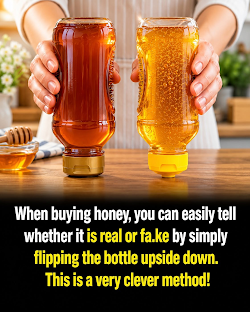
By contrast, certain inexpensive sweeteners can be produced on a much larger industrial scale. When dishonest suppliers use these substances to replace part of the honey in a product, they may reduce production costs while selling the finished mixture at a price that suggests it is genuine honey.This creates a problem for ordinary shoppers. A bottle may look attractive, have a familiar label, and taste pleasantly sweet without necessarily containing what the seller claims. In some cases, the difference is difficult to detect without laboratory analysis.Fortunately, consumers are not entirely powerless. Several simple observations can help identify suspicious products, while a few practical purchasing habits can reduce the likelihood of buying adulterated honey.However, one important point must be understood from the beginning: no single home test can conclusively prove that honey is pure. Popular tricks involving bubbles, water, crystallization, or a spoon can provide clues about physical properties, but genuine honey varies naturally, and some adulterated products can behave much like authentic honey.Understanding what these tests can—and cannot—tell you is the first step toward making a better-informed choice.1. The Flip-and-Bubble Test: What Happens When You Turn the Bottle Upside Down?
How to Spot Real Honey with One Simple Trick…