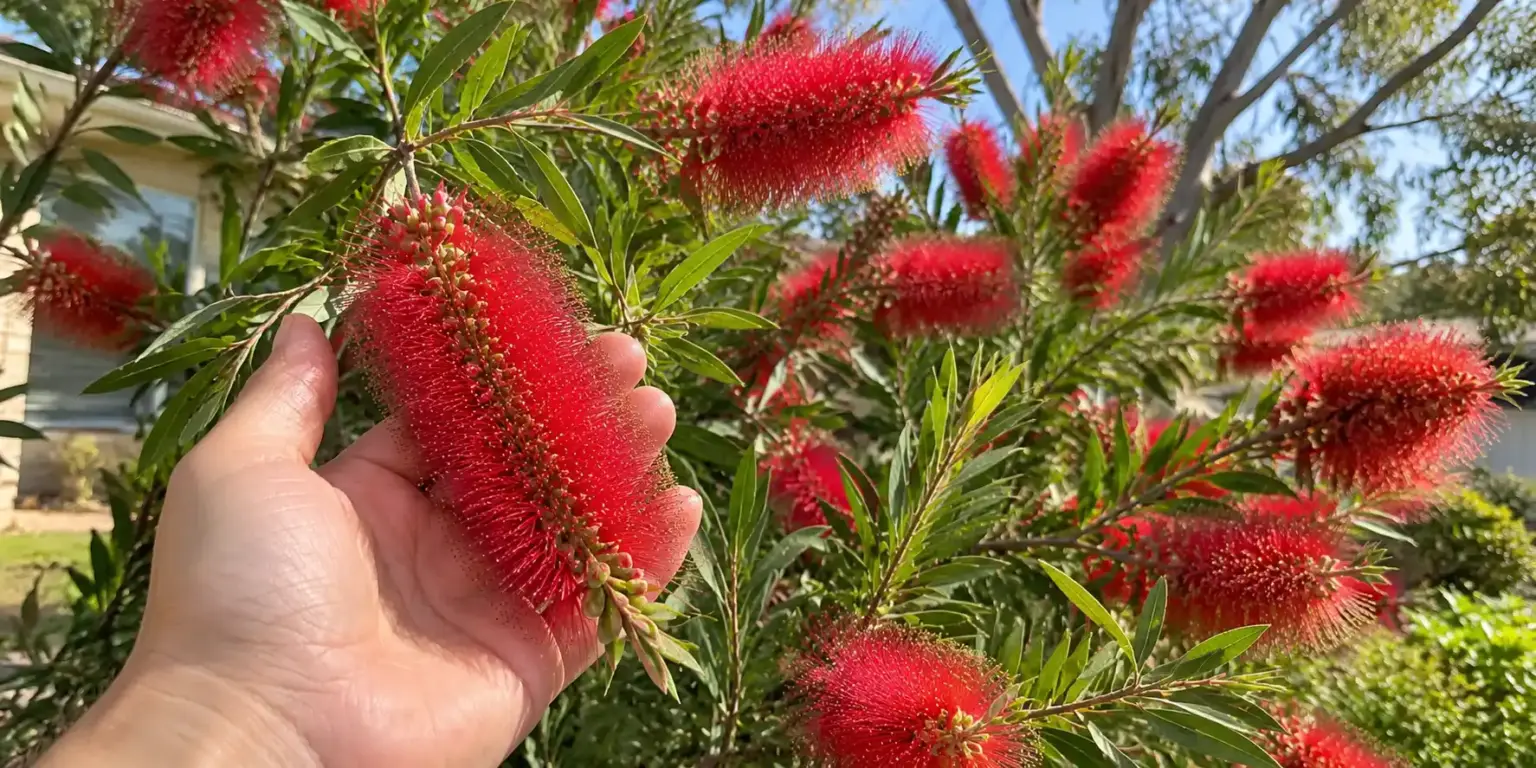
Belonging to the myrtle family (Myrtaceae), the lemon bottlebrush is a direct relative of both the eucalyptus tree and the medicinal tea tree. If you crush one of its narrow green leaves between your fingers, you will immediately smell a clean, sharp aroma that blends fresh lemon with soft eucalyptus. For centuries, traditional healers and everyday households have used the leaves and flowers of this plant to clear congested lungs, fight germs, soothe sore skin, calm aching joints, and make refreshing natural drinks.Understanding the Plant: Why It Has Two NamesWhen looking up information about this plant, you will see two different scientific names used for the exact same tree:Callistemon citrinus (The Traditional Name): Given in the early 1800s by Scottish botanist Robert Brown, the word Callistemon comes from Greek words meaning “beautiful stamens,” referring to the long red threads that form the flower spike. The word citrinus refers to the distinct lemon scent of the leaves.Melaleuca citrina (The Modern Name): Modern plant scientists discovered that bottlebrush plants are so closely related to tea trees (Melaleuca) that they belong in the same plant group.Common Everyday Names: Around the world, people simply call it the Crimson Bottlebrush, Red Bottlebrush, or Lemon Bottlebrush.How to Recognize Lemon BottlebrushBefore using any plant at home, it is important to make sure you have the right species. You can identify Melaleuca citrina by these simple features:
The Hidden Power of the Lemon Bottlebrush (Melaleuca citrina): Traditional Benefits and Simple Homemade Uses